Between the River and the Great West Road: A Practical Guide to Choosing Where to Rent in Brentford
Ask anyone who lives in Brentford where they’d rent if they were starting again, and the answer usually depends on one thing: do you want to be near the water, or near the road? If you’re comparing streets, they Brentford lettings specialists will tell you the town has a few distinct personalities packed into a small area. Here’s how I’d think about choosing between them.
A town with two edges
Brentford sits where the River Brent meets the Thames, and it has been a crossing and trading point for a very long time. The Brent flows south-eastwards as part of the Grand Union Canal before it reaches the Thames. That water shapes the south of the town.
Go north and the mood changes. The area’s northern border is the start of the M4 corridor, and the Great West Road runs through it. So, the choice really is between two ends of the same town, one calmer and watery, the other busier and better connected by road.
Down by the water
Brentford Lock, where the Grand Union Canal meets the Thames, is one of the town’s prettiest corners. It’s lined with moored narrowboats, waterside cafés and converted warehouses. The canal here dates back to 1805, when it was known as the Grand Junction Canal, and Brentford Dock opened in 1859 as an interchange between the Thames and the railway.
For renters, that history means character. It also means you’ll want to ask practical questions. How does the building cope with damp near water? Is the walk home well-lit at night? And how do you feel about weekend footfall along the towpath?
The newer developments around Kew Bridge
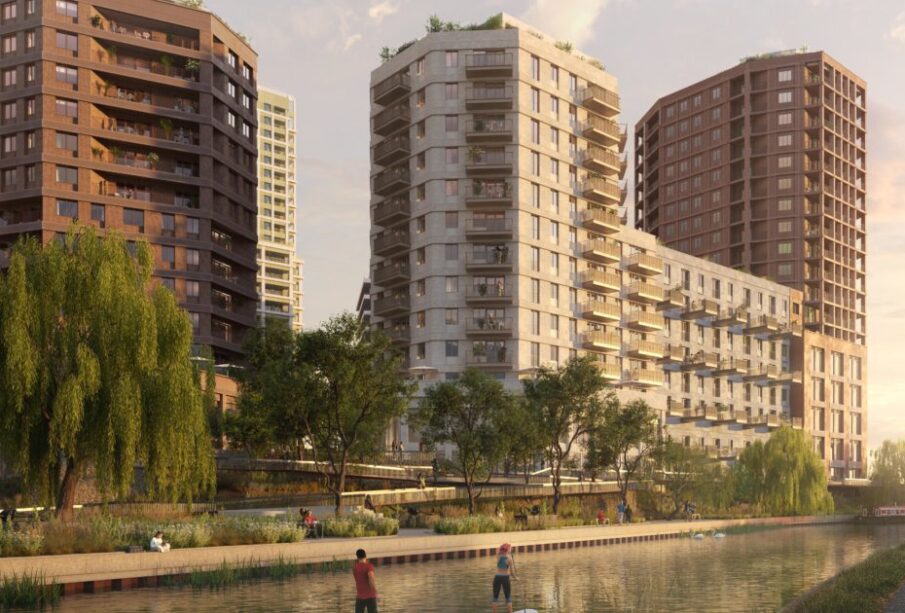
Close to the river, schemes such as Kew Bridge, Kew Bridge West and the Great West Quarter have changed the housing stock. These tend to suit people who want modern flats, with a Thames Path walk on the doorstep. The old Griffin Park football ground is also being turned into a development of around 75 homes, so the area keeps evolving.
New-build rentals come with their own checklist. Ask what’s included in service charges that might affect your costs, how heating and hot water work, and what the building management is like.
The High Street
Brentford’s High Street is the glue. It has independent shops, cafés and supermarkets, and many newer developments also have shops on site. If you like being able to pop out for milk without driving, living within a few minutes’ walk of the High Street is a real advantage.
The Great West Roadside
Nearer the Great West Road and the M4, you’re close to the road network, which suits people who drive or need quick access to Heathrow or the west. The trade-off is traffic. A road that feels quiet at 11am on a Saturday can be a different place at half past five on a weekday, so visit at rush hour before you sign anything. That’s my advice rather than a rule, but it’s saved plenty of people from regret.
Getting around
Brentford is well placed for commuters. Overground trains from Brentford or Kew Bridge stations run to Waterloo, and the Piccadilly line is available from Boston Manor and Chiswick Park. Journeys to the West End and the City take in the region of half an hour, depending on where you’re going and when.
When you’re viewing, test the actual walk to your station. A map can make a ten-minute walk look like two, and nothing beats doing it with your own feet.
Parking is worth asking about
Parking near the town centre and riverside is limited, with a mix of pay-and-display bays and resident permit zones. If you have a car, ask whether a permit comes with the property and what it costs. If you don’t, check whether cycle storage is secure and easy to reach.
Questions worth asking at a viewing
A few I’d keep in your pocket:
- How far is it to Brentford, Kew Bridge or Boston Manor station, and how long does it really take?
- Is the street noisy at peak times?
- What are the parking arrangements?
- How does the heating work, and what do bills typically look like?
- Is there anywhere to dry washing or store a bike?
Know your rights
Renting rules changed on 1 May 2026 under the Renters’ Rights Act. Most tenancies are now assured periodic tenancies, which means they roll on without a fixed end date, and section 21 ‘no-fault’ evictions have been abolished. The deposit cap hasn’t changed: it’s five weeks’ rent where annual rent is under £50,000, and your deposit must be protected in an approved scheme. It’s worth reading the government’s tenant guidance before you sign.
Making the choice
There isn’t a wrong answer in Brentford, only a better fit. If you want a lively waterside setting, look near the lock and the High Street. If you want newer flats with a riverside stroll, the Kew Bridge area is worth a look. If road access matters most, the north of the town may suit you.
Spend a Saturday morning and a weekday evening in your shortlisted streets. You’ll learn more than any listing can tell you.